Stroll Through 5 Areas of Minato City! A Photogenic Journey Exploring "Mega Structures" of Overwhelming Scale
Stroll Through 5 Areas of Minato City! A Photogenic Journey Exploring "Mega Structures" of Overwhelming Scale
Translated from Japanese by
Despite being in the heart of the city, Minato City boasts diverse faces and consists of five areas: Shiba, Azabu, Akasaka, Takanawa, and Shibaura-Konan. Each area breathes with a unique personality based on its topography and history, and when you actually visit these places, mega structures symbolizing their respective eras will welcome you. Mega structures that captivate viewers with their overwhelming sense of scale, such as Tokyo Tower, which symbolizes Showa-era Tokyo, and Azabudai Hills Mori JP Tower, which boasts the title of Japan's tallest building and has become a new landmark of the Reiwa era, along with their surroundings, are some of the best "photogenic spots" in Minato City. This time, we toured the five areas of Minato City and experienced the power that each mega structure holds.
Shiba's Tokyo Tower, Continuing to Color the Sky Since the Showa Era
Its Graceful Figure is the Face of Tokyo, Loved Across Eras
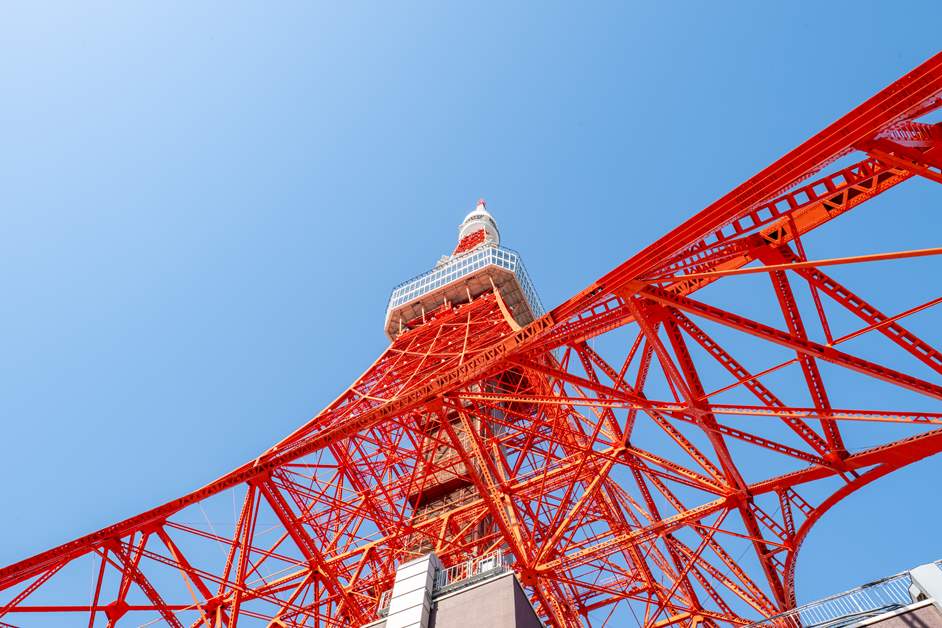
The Shiba area is a business district representing Japan, such as Shimbashi and Toranomon. On the other hand, it is an area where stillness and motion coexist, home to historic temples and shrines like Zojo-ji Temple. Adding color to the sky above Shiba with its vivid contrast of international orange and white is "Tokyo Tower." Since its completion in 1958 (Showa 33), this 333-meter-tall tower has always been loved as a landmark of Tokyo.
Azabudai Hills Mori JP Tower, Born in 2023, Overlaps Behind Tokyo Tower
The greatest charm of Tokyo Tower is, without a doubt, its steel frame structure that perfects functional beauty. The silhouette of the steel framework, assembled like a mesh, is somewhat delicate yet makes you feel the strength of being firmly rooted in the earth.
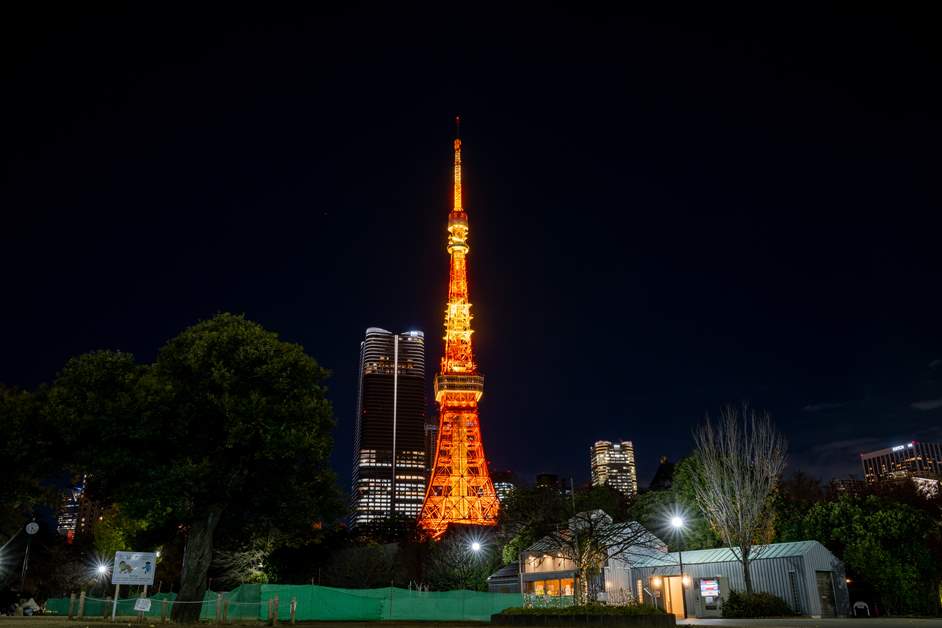
Tokyo Tower at Night Photographed from Shiba Park
As the sun sets, it increases its beauty even further, emerging in orange illuminated by approximately 180 lights. There are two patterns for the illumination: a warm "Winter Version" and a cool "Summer Version." The illumination also changes depending on anniversaries and events, so if you plan to photograph the night view, be sure to check the illumination calendar on the official website.
Getting Excited as Tokyo Tower Grows Larger the Closer You Get from the Station
If you are heading to Tokyo Tower, the route exiting above ground from the Akabanebashi Exit of Akabanebashi Station on the Toei Oedo Line is close and recommended. We arrived at the foot of Tokyo Tower in about a 5-minute walk from the station.
You Can Also See the Regularly Placed Rivets Up Close
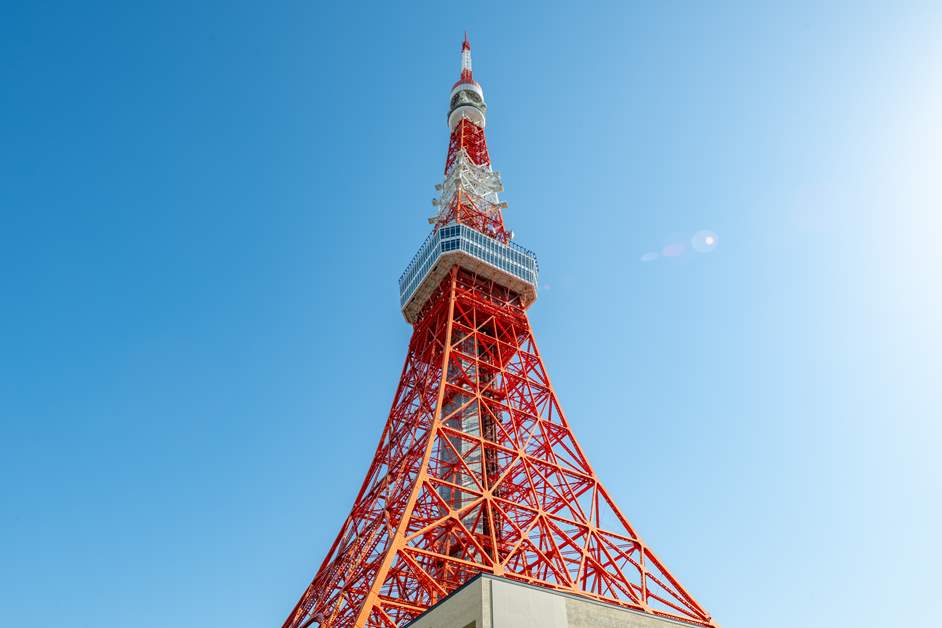
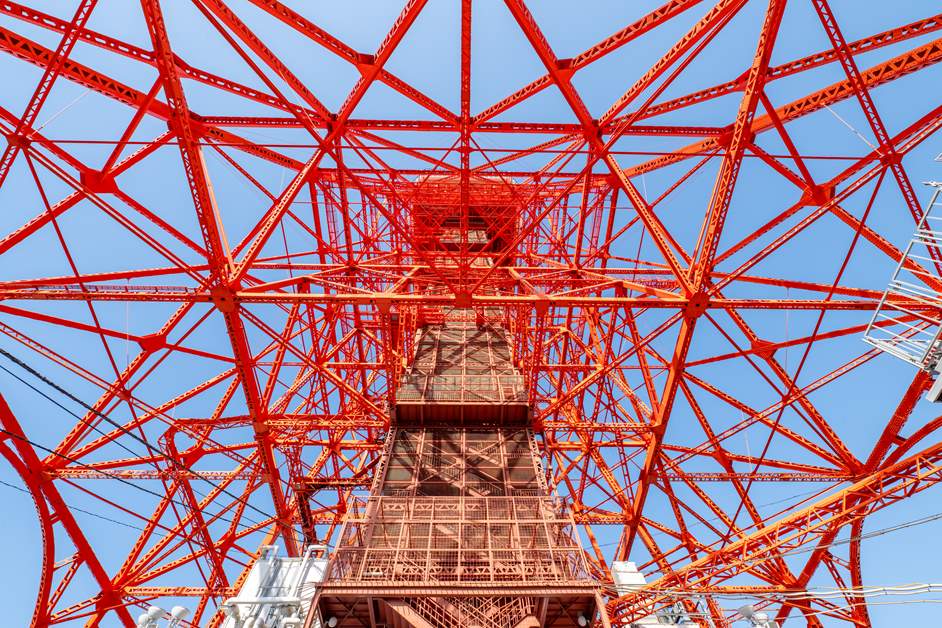
Once you arrive directly underneath the tower, try looking straight up. The geometric patterns drawn by the intricately intertwined steel frames are just like a giant kaleidoscope. The overwhelming sense of density is a structural beauty unique to Tokyo Tower that is quite difficult to capture from a distance.
Azabu's Skyscraper Overlooking the Future from Japan's Highest Point
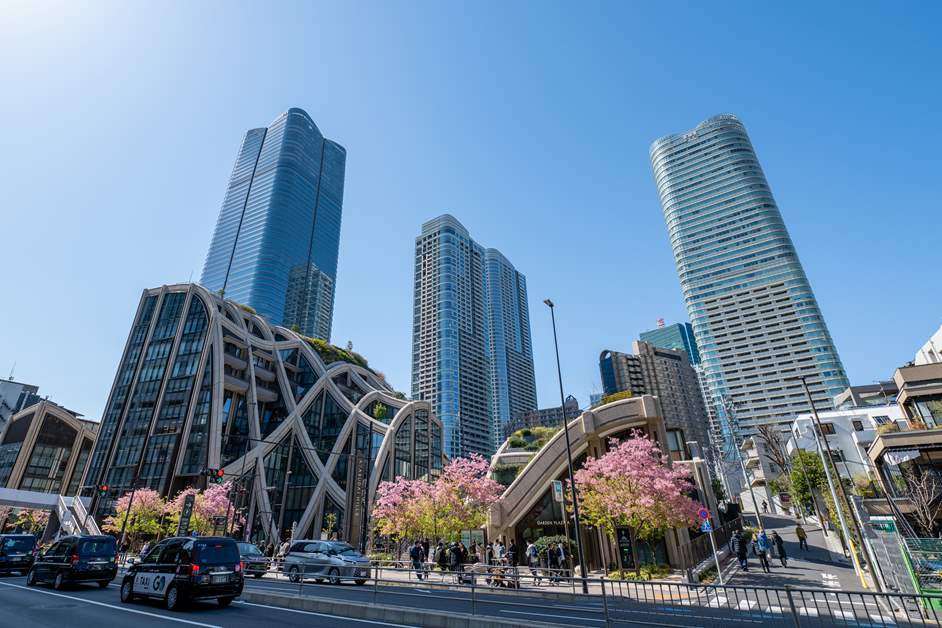
Azabudai Hills, Opened in 2023, Spanning Azabudai 1-chome, Toranomon 5-chome, and Roppongi 3-chome
The Azabu area is a historic district where samurai residences of various domains stood in a row during the Edo period, leaving their names to this day in slope names like Toriizaka and Sendaizaka. Since the Meiji era, the samurai residences transformed into embassies of various countries, and currently, an internationally rich atmosphere coexists with sophisticated residential areas. Born in such Azabu as a new city is "Azabudai Hills." Offices, residences, a hotel, a school, medical facilities, and more are concentrated on the vast grounds, possessing functions that truly live up to the name "Compact City."
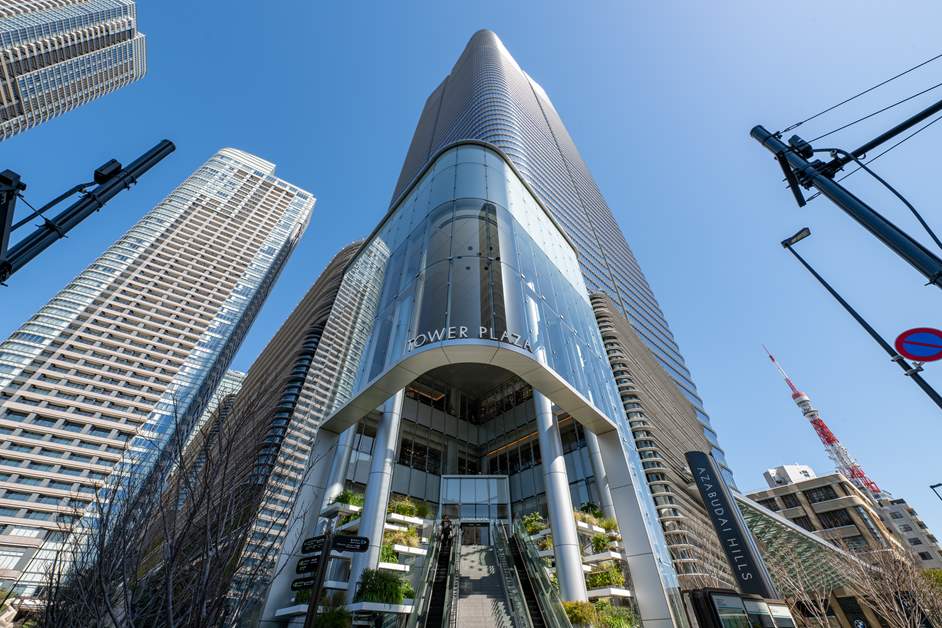
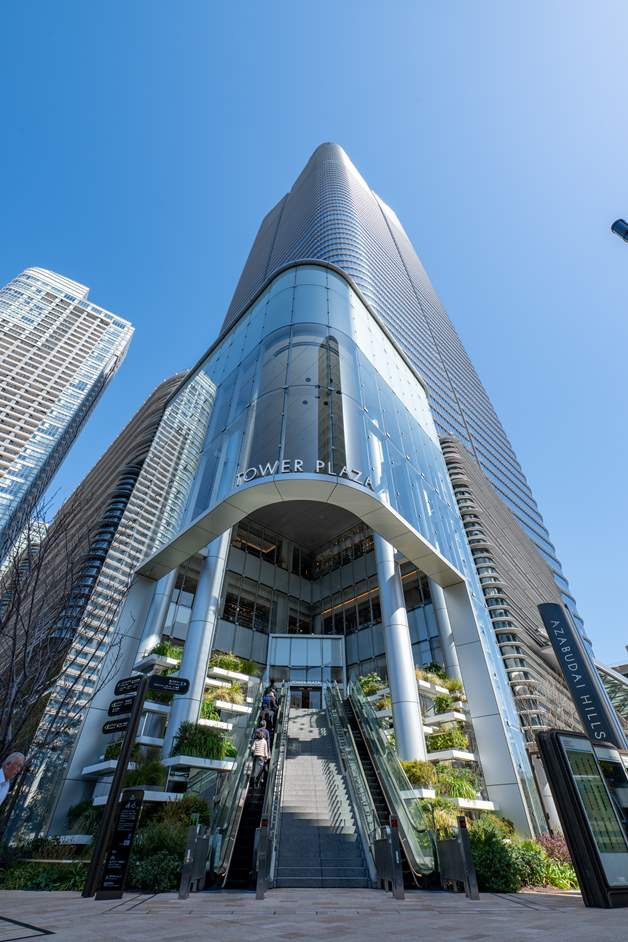
The View Looking Up from Near the Entrance is Just Like a Giant Tree Reaching the Heavens
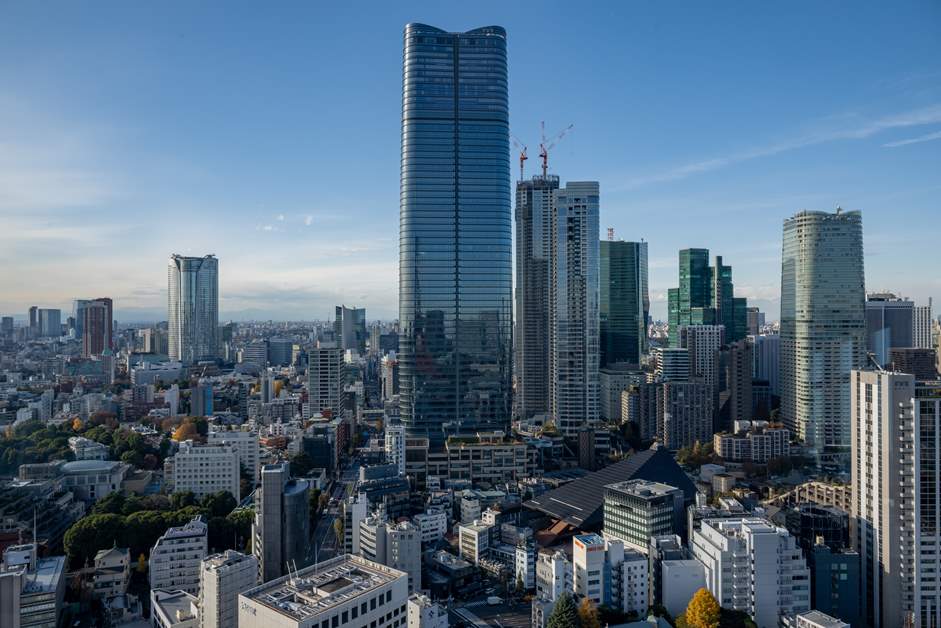
"Emitting an overwhelming presence as the symbol of the city is the ""Azabudai Hills Mori JP Tower."" With 64 floors above ground, it is known as the tallest building in Japan, boasting a height of approximately 330 meters (as of April 2026).
The characteristic of this building is its graceful silhouette. The barrel-shaped design, which is not strictly linear but slightly bulges in the center, does not feel oppressive despite its enormous size, and smoothly blends into the surrounding cityscape."
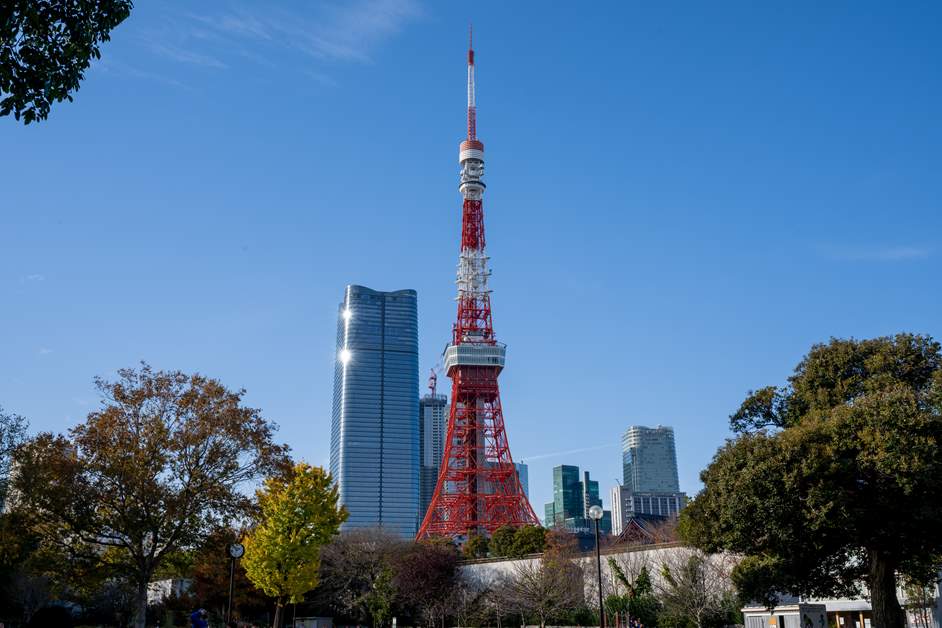
Mori JP Tower Photographed from the Observation Deck of Tokyo Tower
The beauty of Mori JP Tower stands out even more when viewed from afar. The fully glazed exterior walls reflect the color of the sky and the cityscape depending on the season and time of day, showing different expressions from moment to moment.
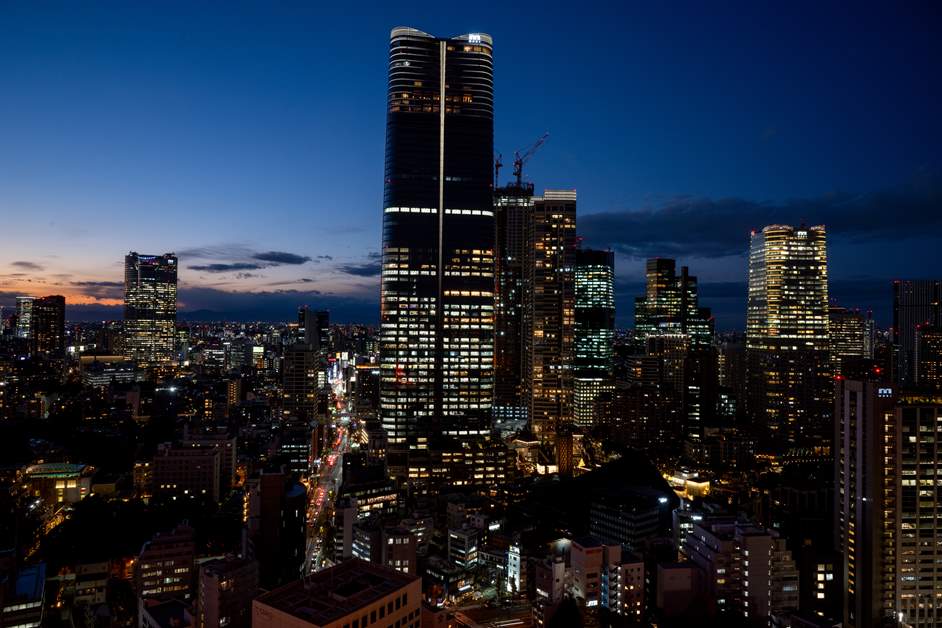
The Mori JP Tower Towering Majestically at Night
At night, it emits a different kind of brilliance. Illuminated by the lights on each floor, the entire building emerged in the night sky like a giant sculpture of light.
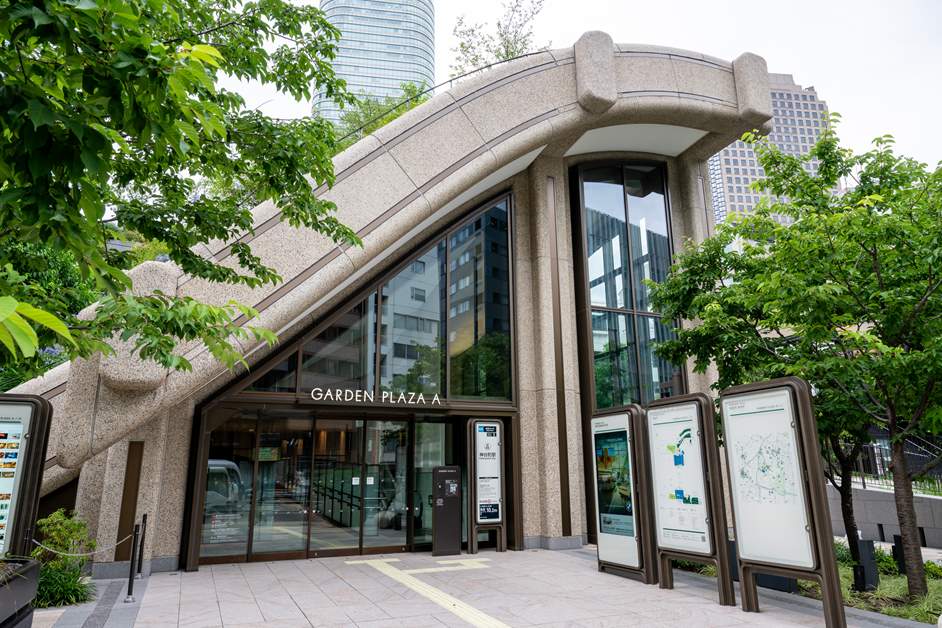
Azabudai Hills with a Vast Site of Approximately 8.1 Hectares
Azabudai Hills features art and greenery arranged throughout. With the globally renowned "teamLab Borderless" and galleries where you can experience first-class art, the city itself is like one giant art museum. Experiencing art while touring mega structures is a way of enjoyment unique to Azabudai Hills.
Akasaka's Landmark Towering Over the Hub of Broadcasting Culture
Akasaka Sacas is a Complex Facility Born from the Redevelopment of the Akasaka Area
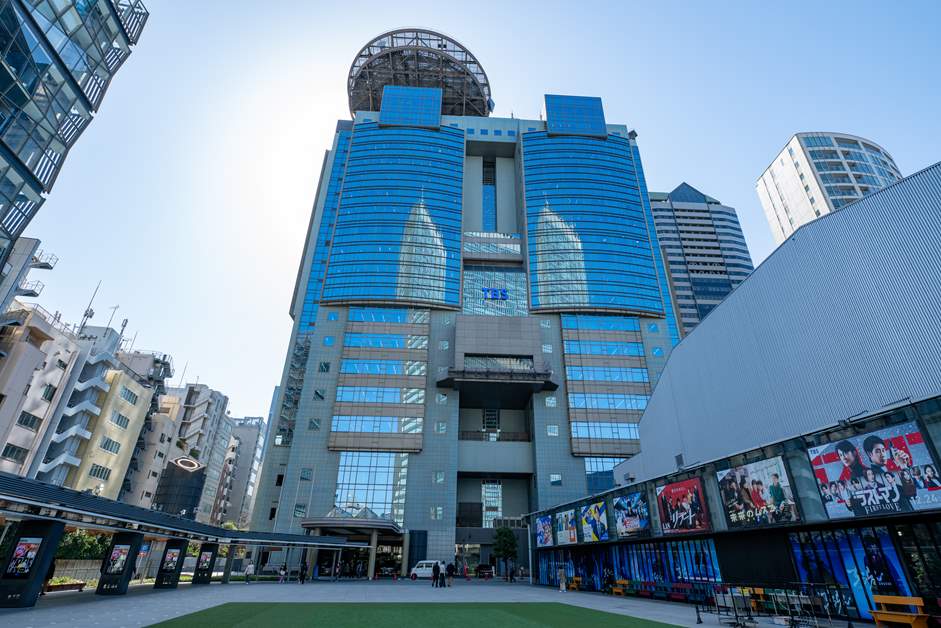
The Akasaka area has flourished as a district of guesthouses and high-end Japanese restaurants since the Meiji period, and developed into a glamorous downtown area gathered with commercial facilities after the war. Located in the center of this city where many cultural figures and entertainers come and go is "Akasaka Sacas," which had its grand opening in 2008. Centered around the "TBS Broadcasting Center," the headquarters for TBS TV and TBS Radio, it serves as an entertainment hub where a theater, an office building, and commercial facilities line up.
There is a Cafe in the Building's 1st-Floor Lobby, Available for Public Use
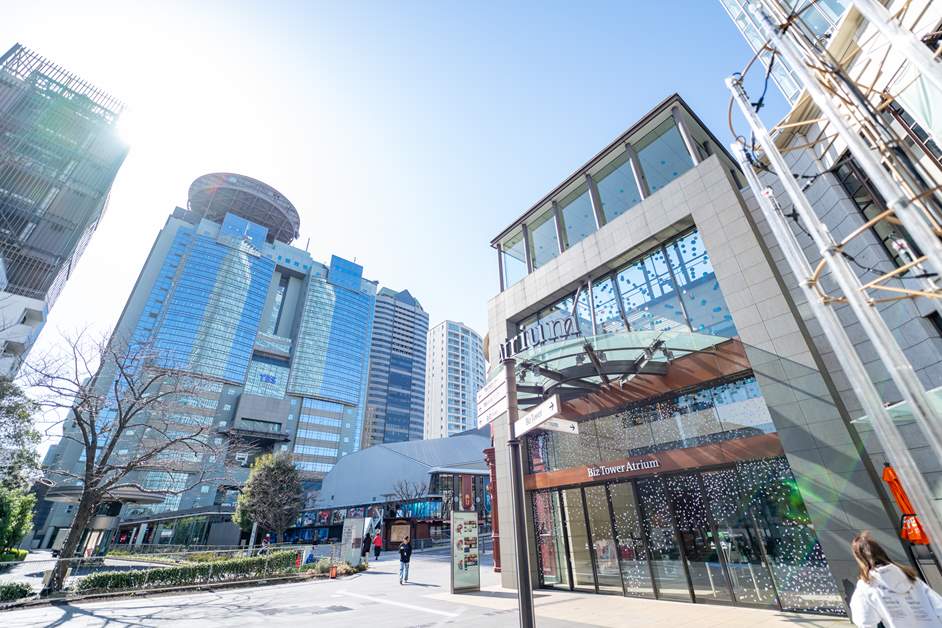
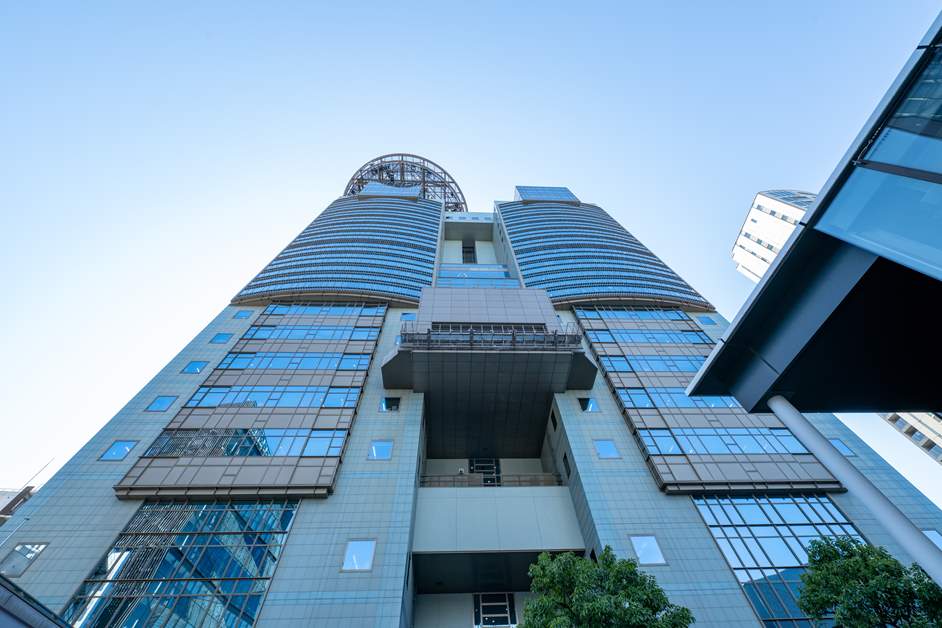
The "TBS Broadcasting Center" towering in the center of Akasaka Sacas was completed in 1994. Because the giant circular parabolic deck installed on the roof looks like a hat, it is affectionately known by the nickname "Big Hat." From this 20-story building, the latest information is constantly being broadcast.
About a 1-Minute Walk from Akasaka Station on the Tokyo Metro Chiyoda Line
The building is fully equipped with multiple studios for television and radio. It gives you a wondrous feeling to think that the various programs you always watch and listen to are being made inside here. By the way, it is said that TBS is the only commercial broadcaster in Tokyo that broadcasts both television and radio on its own stations.
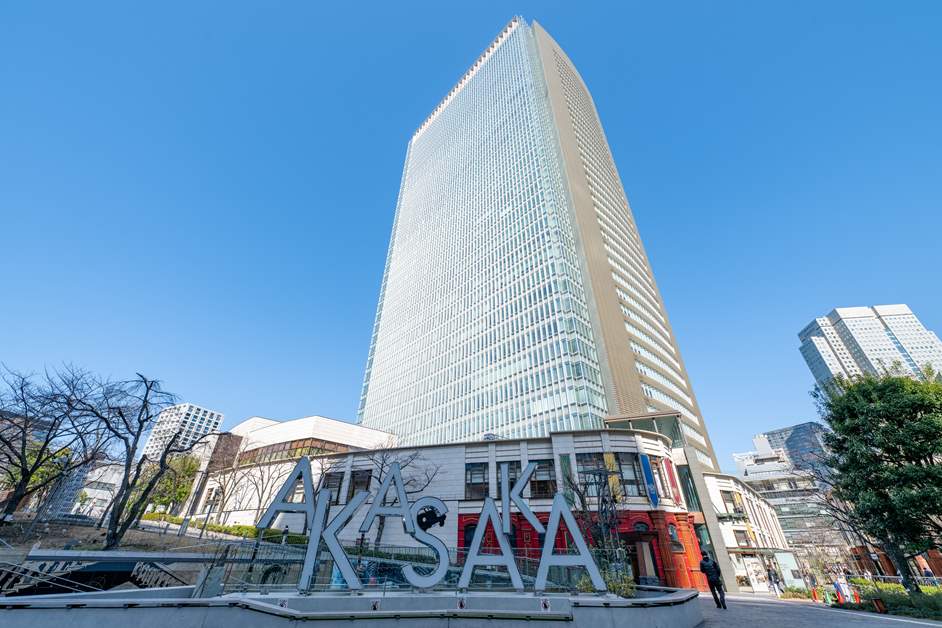
Akasaka Biz Tower, Characterized by Its Linear Exterior
Built near the TBS Broadcasting Center, "Akasaka Biz Tower" is a super high-rise complex building with a height of approximately 179 meters and 39 floors above ground. Since its completion in 2008, it has become a hub supporting Akasaka's business scene. In the commercial area "Shops & Dining" on the lower floors, everything from long-established stores loved in Akasaka for a long time to the newest cafes line up, serving as a place of relaxation for business people working nearby and tourists.
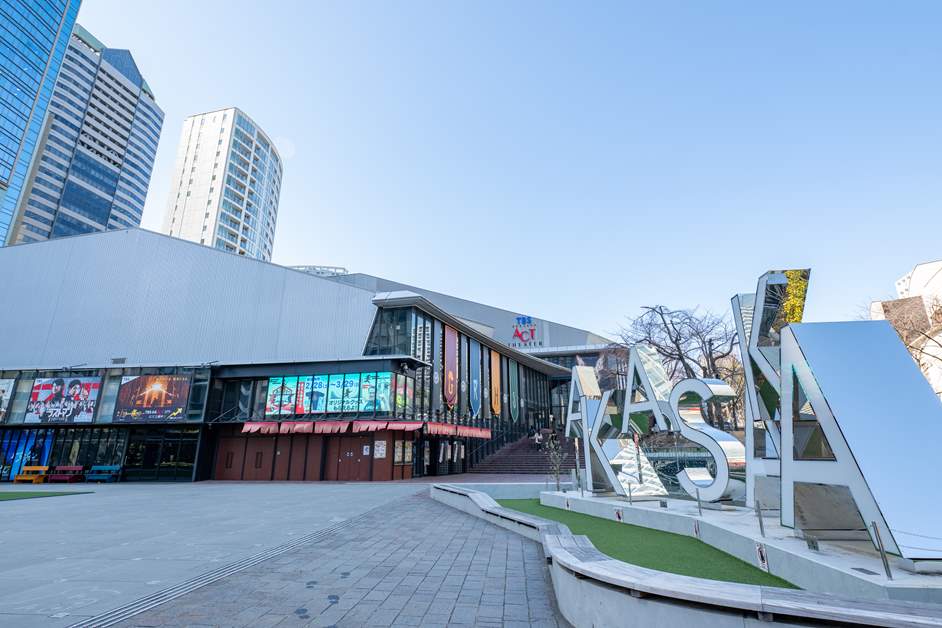
Various Live Concerts, Stage Plays, and Musicals Have Been Performed
Akasaka Sacas is also a hub for live entertainment. "Akasaka BLITZ," where many legendary live concerts were once held, has now transformed into "TBS AKASAKA BLITZ STUDIO," a studio where program recordings and public viewing are possible. The adjacent "TBS Akasaka ACT Theater" has been operated as a dedicated theater for the stage play "Harry Potter and the Cursed Child" since 2022, and the exterior of the theater and its surroundings are unified with the worldview of Harry Potter.
A Cluster of Giant Buildings Built in the New District of Takanawa Where History and Future Intersect
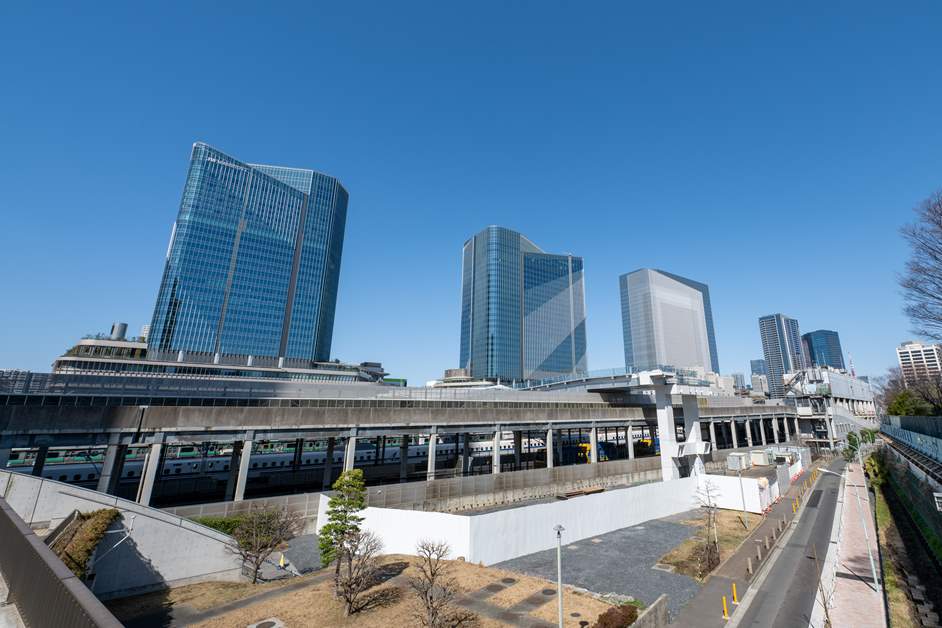
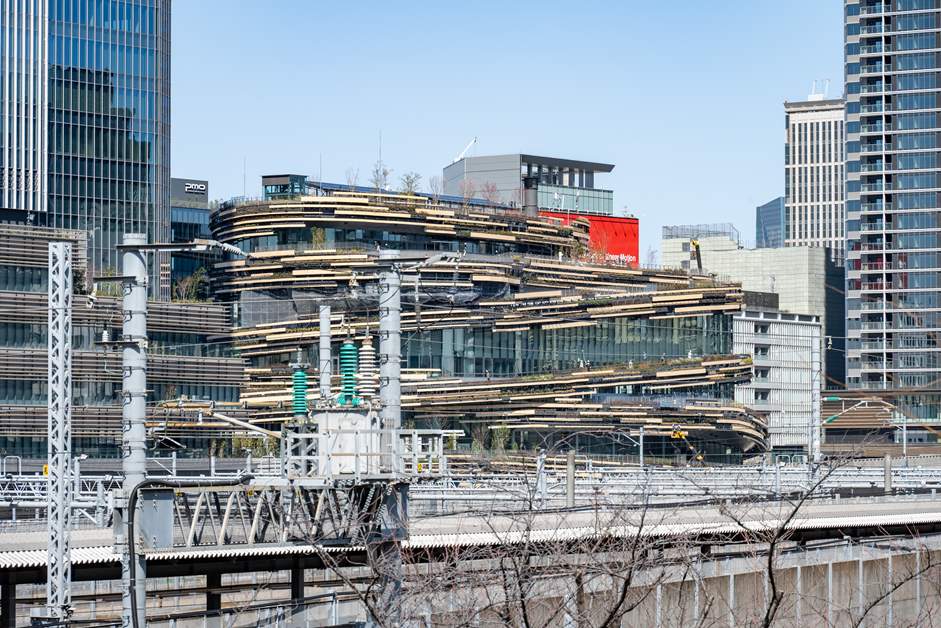
Photographing the Entire View from the Opposite Side of TAKANAWA GATEWAY CITY Across the JR Tracks
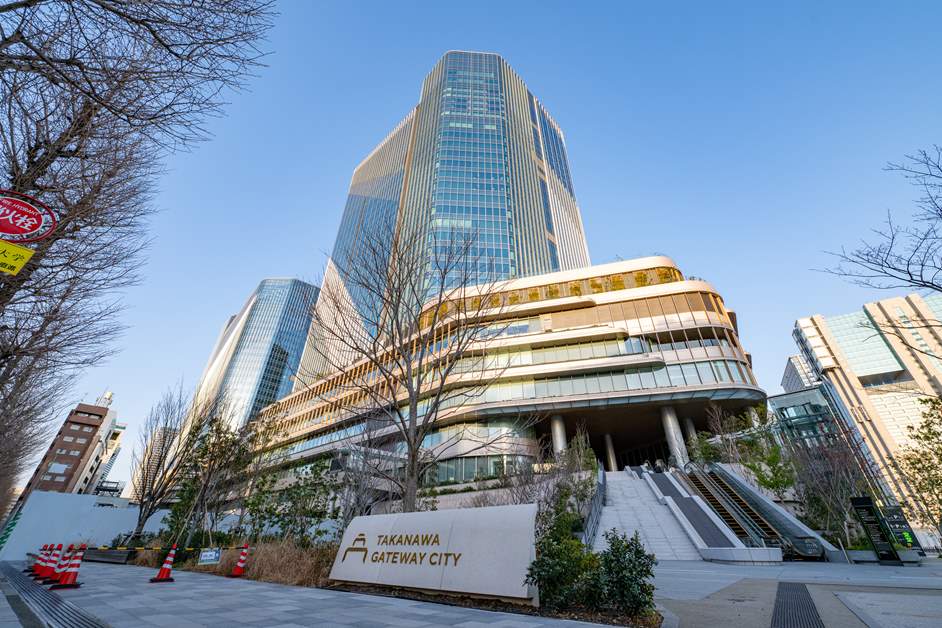
The Takanawa area is a historic district that has flourished since ancient times as the "Southern Gateway to Edo." While many historical remains survive, such as Sengaku-ji Temple, associated with the Ako Roshi (47 Ronin), and the site of the Takanawa Okido gate, it is currently transforming into a futuristic city where people from all over the world gather due to the birth of "TAKANAWA GATEWAY CITY." In this vast area, which celebrated its grand opening on March 28, 2026, mega structures blending cutting-edge technology with Japanese aesthetic consciousness line up.
Photographing the SOUTH Building from the Dai-Ichi Keihin Side
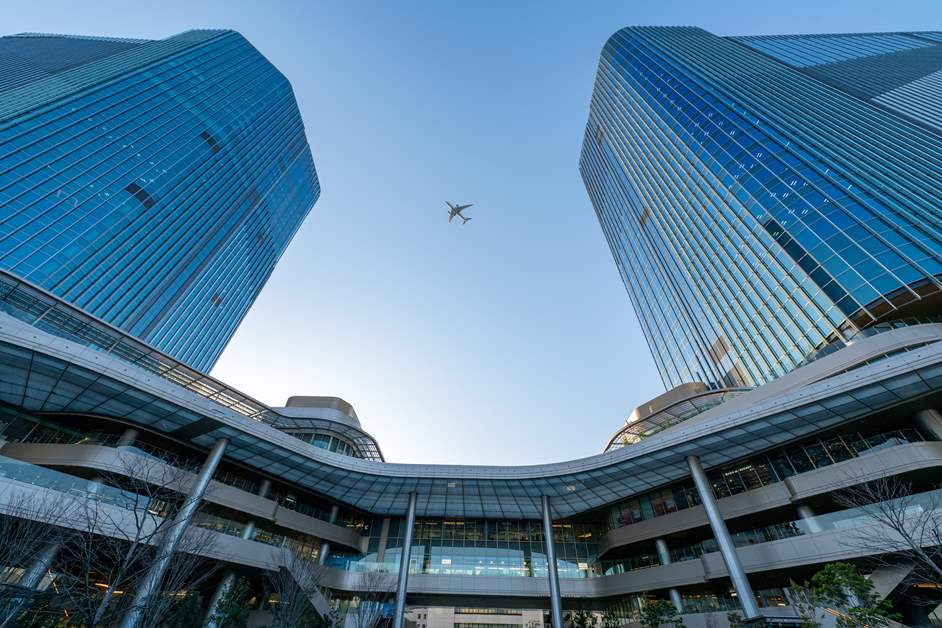
Adjacent to Takanawa Gateway Station and serving as one of the faces of the city is "THE LINKPILLAR 1." The massive twin towers, boasting a height of approximately 160 meters, consist of two buildings: NORTH and SOUTH. The NORTH building has 29 floors above ground, and the SOUTH building has 30 floors above ground. Inside, they are equipped with diverse functions, including not only offices and commercial facilities but also a luxury hotel and an international convention center.
The Moment an Airplane Passed Overhead
As you pass through the South Ticket Gate of Takanawa Gateway Station, the overwhelming sense of volume of THE LINKPILLAR 1 presses right before your eyes. The transparent exterior of the twin towers, which heavily uses glass, reflects the color of the surrounding sky and displays different brilliance depending on the season.
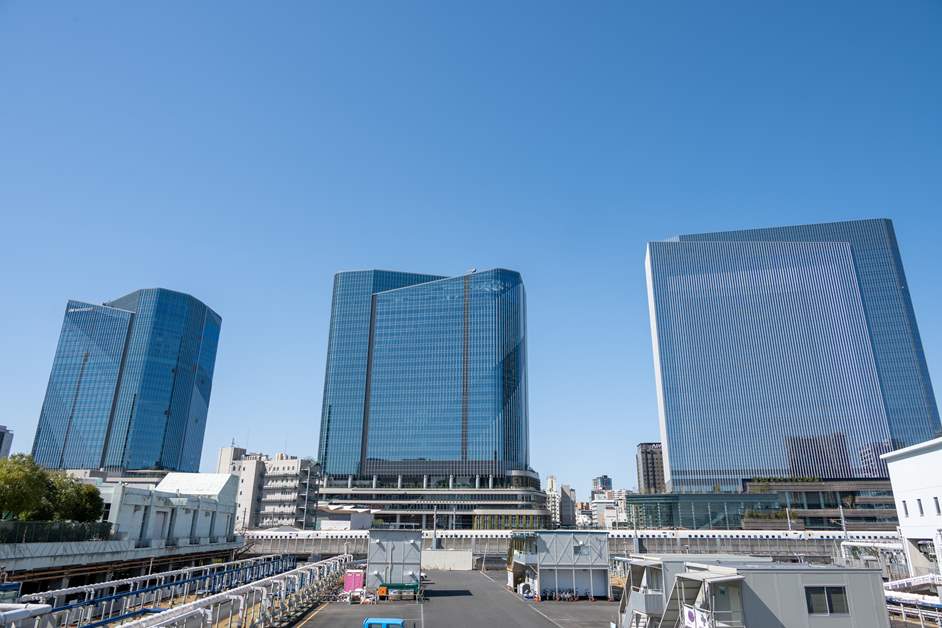
The Furthest Right is THE LINKPILLAR 2
Located to the right of the twin towers when viewed from the station is "THE LINKPILLAR 2." With 31 floors above ground and a height of approximately 167 meters, it stands out as exceptionally tall even within the city, radiating a strong presence. In addition to office floors, the building is fully equipped with a clinic and a fitness gym, serving as a hub to support the well-being of the people who work and live here.
An Organic and Warm Museum
Located next to THE LINKPILLAR 2 is the exhibition hall & hall "MoN Takanawa: The Museum of Narratives." This building, designed by Kengo Kuma and Associates, is a low-rise structure with 6 floors above ground and 3 floors below ground. It features an original design spiraling upward from the earth to the sky, and wood is abundantly used on its exterior.
Shibaura-Konan's Rainbow Bridge Connecting the Canal City and Odaiba
Construction Started in 1987 and Was Completed in 1993
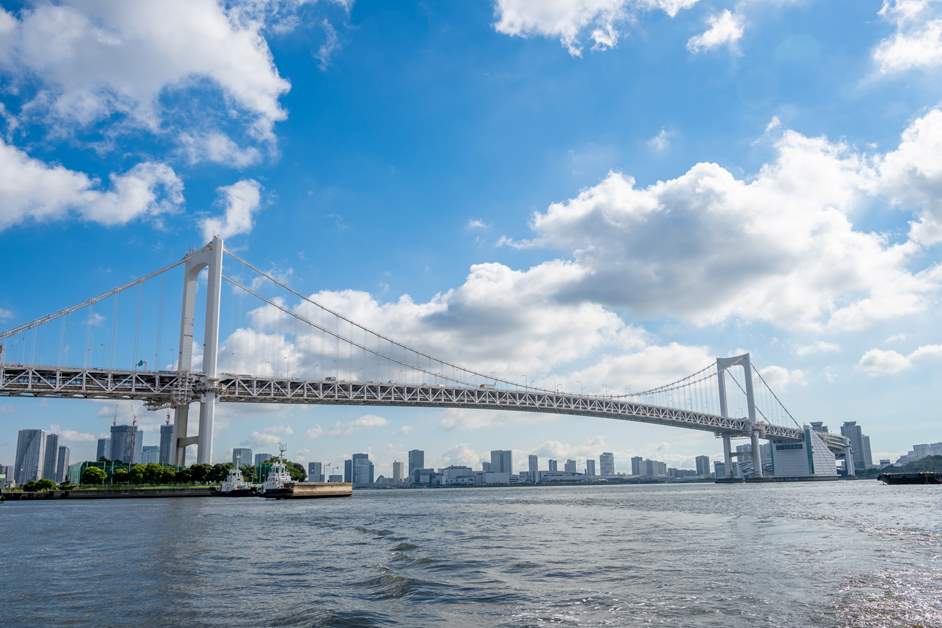
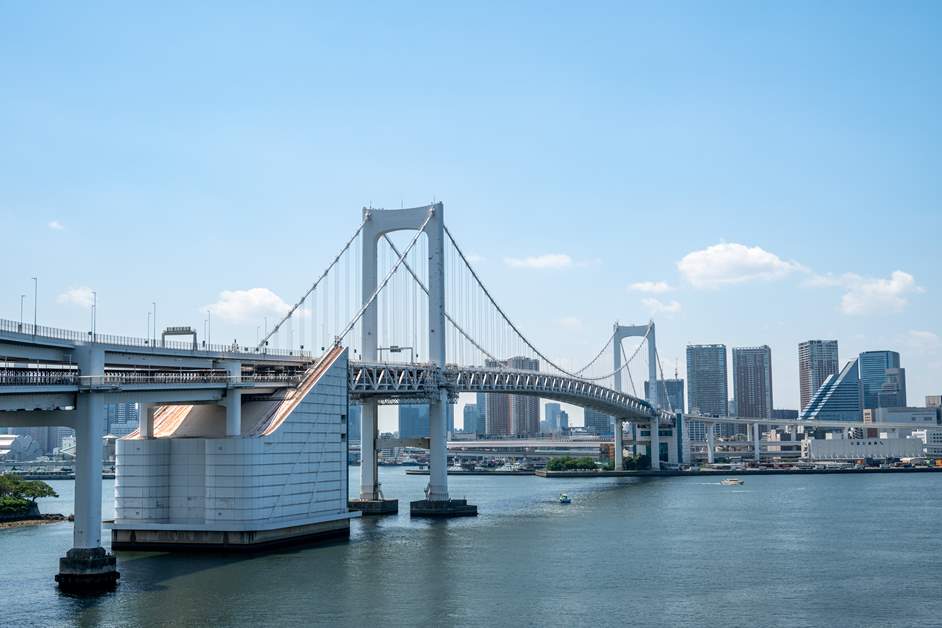
The Shibaura-Konan area is bustling as a logistics hub even today, with many canals flowing through it. The Rainbow Bridge, which opened in this area in August 1993, is an offshore complex transportation infrastructure through which an expressway, general roads, and the "Yurikamome" transit system pass. This suspension bridge, with a length of 798 meters, draws a single elegant line as if symbolizing the Tokyo Bay Area.
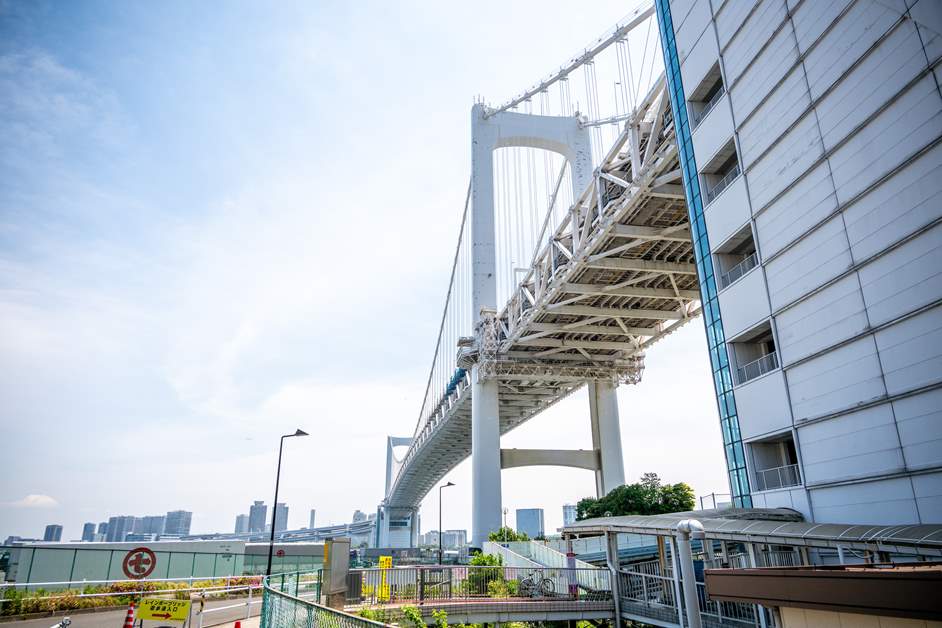
Photographing the Odaiba Side from the Shibaura Anchorage
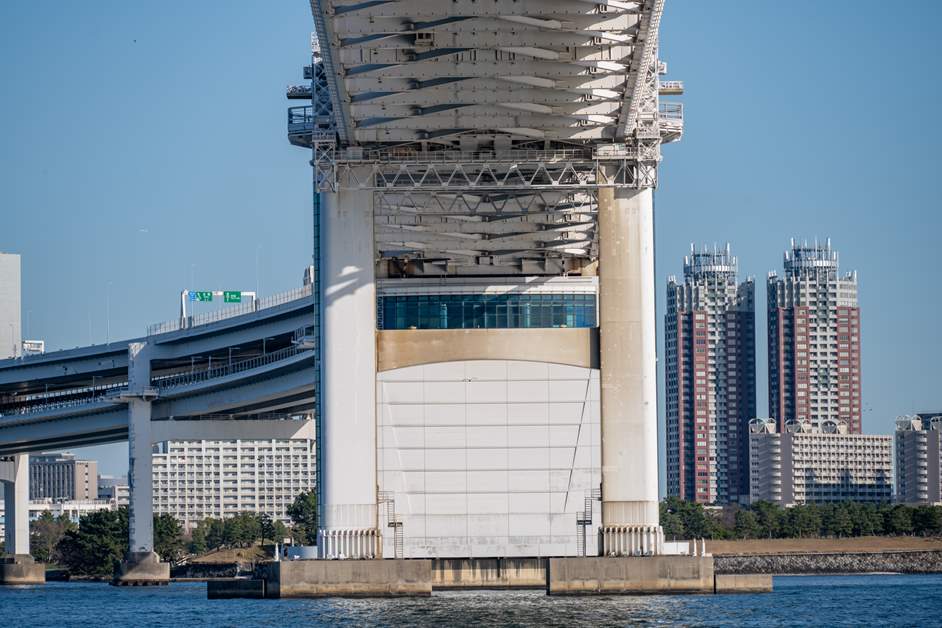
To support the suspension bridge's giant main cables, massive concrete structures called "Anchorages" are installed on both shores. This enormous mass, equivalent to a 7-story building, is the unsung hero supporting the bridge. When seen up close, you will be overwhelmed by its inorganic, imposing sense of mass. The Rainbow Bridge can also be crossed on foot, and you can enter the promenade from this anchorage.
The Main Tower Supporting the Suspension Bridge Where Many Vehicles Pass Daily
Towering to a height of 126 meters above sea level, the main tower is one of the important elements shaping the bridge's elegant silhouette. The main cable extending from the tower is about 80 centimeters thick, consisting of numerous bundles of wire.
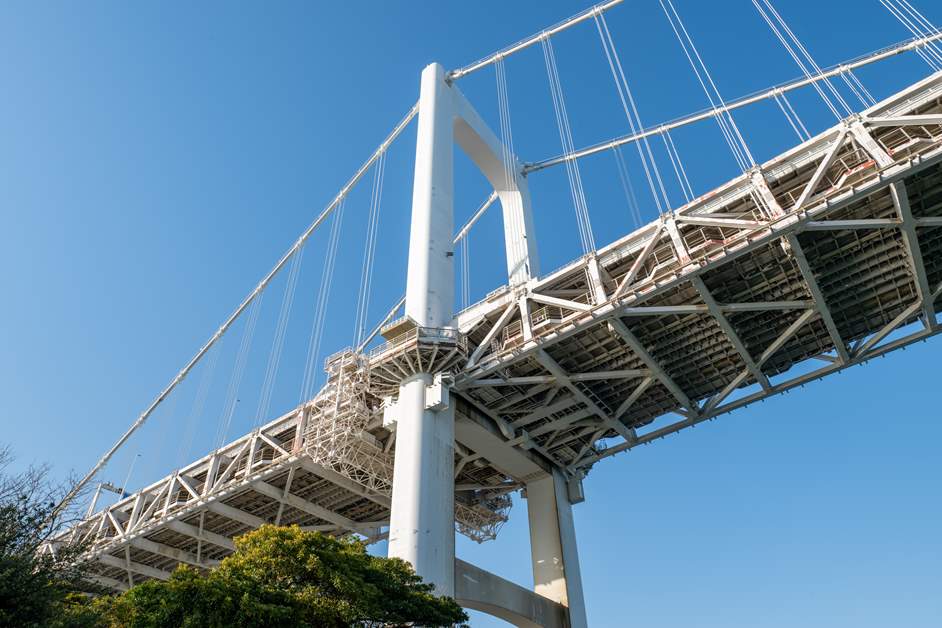
A Special Angle Seen from Under the Bridge
A recommended way to enjoy the Rainbow Bridge is to look at the "underside of the bridge." Looking up from under the Shibaura side anchorage, you can see that the intricately combined truss structure (a framework combining triangles) continues. The Odaiba side anchorage can be seen in the distance, allowing you to feel a geometric depth.
You Will Surely Be Mesmerized by the Silver Bridge Shining Against the Sea
The full view seen from the Odaiba side on the opposite shore is also not to be missed. While the bridge seen from the Shibaura side has the face of a powerful piece of infrastructure, the bridge seen from Odaiba looks like a graceful work of art with a cluster of urban buildings as its background.
Although Minato City is a major metropolis representing Japan, taking one step into its alleys reveals historic temples, shrines, and lush green parks. The contrast between mega structures and the seasonal nature or historical famous places and ruins might be said to be the greatest thrill of strolling through Minato City. Using the mega structures representing the five areas of Minato City as a starting point, why not set out on a journey to capture your favorite photo?